

AI-native customer support without the AI-startup budget

Modena’s support team handles inbound emails in three languages and serves two distinct audiences — borrowers and investors — under licensed-financial-institution audit requirements. 

Annual direct financial gain (5 agents)
27 420 €
Time saved by AI features
27.5h / week

Challenge 

Every customer reply at a licensed credit institution must be auditable and regulation-compliant. The support team was juggling three languages, two portals (modena.ee for lending and modena.capital for investors), and the constant pressure of fast, consistent quality across a small team.

Solution 

  • 11 AI workflows, one platform. AI is integrated into 11 distinct support workflows rather than bolted on as a side chatbot; every AI output goes through human review before reaching a customer. 
  • Cost-aware three-model strategy. Triage runs on Haiku, reply drafting on Sonnet, complex reasoning on Opus — admins can see and override the choice per scenario. 
  • RAG on the Zendesk archive. Every new ticket surfaces the three most similar resolved tickets as context, so the AI learns from how humans actually handled the same question. 
  • Portal-aware knowledge base. Every KB article is tagged with a portal — investor tickets never see lending FAQs and vice versa. 
  • Self-extending KB. Every Sunday, Claude reviews resolved tickets and drafts the three most-recurring FAQs; admins click ‘publish’ after review. 
  • Graceful degradation. If the Claude API is down, the platform keeps running — AI is an enhancement, never a critical path. 
  • AI
  • Backend
  • PHP
  • Self-Service
  • UX

Result 

  • Response time dropped from 5–10 minutes to 1–2 minutes per reply. 
  • Escalations now reach the right person the same day, not from the back of the queue. 
  • Reply quality is more consistent across agents — same KB, same prior resolutions. 
  • New hires use the platform on day one — no ‘prompt engineering’ training needed. 
  • Direct software savings of ~7 140€/year versus Zendesk Suite + Advanced AI. 

Key takeaway 

An AI-native support operation doesn’t need an AI-startup budget — it needs careful workflow integration, a cost-conscious model strategy, and humans in the loop on every decision. 

Dynamic, governance-first data access on Estonia’s most-queried register

The Estonian Population Register is operated by the Ministry of the Interior and SMIT, holding personal data for citizens, EU residents, and permit holders, and serving more than 260 institutions. 

Annual queries
200+ million
Connected institutions
260+

Challenge 

The existing X-Road services were limited by static structures, heavy query loads, and insufficient control over how data was accessed and processed — a problem given the register’s role in critical national infrastructure. 

Solution 

  • REST-based X-Road services. Redesigned with built-in intelligent control mechanisms; queries are dynamically configurable per legal or contextual purpose. 
  • Rule-based governance. Data managers can define which fields are accessible, under what conditions, and for which legal basis — enabling autonomous service governance. 
  • Access-rights GUI + audit logs. A new graphical interface for managing user rights and monitoring usage in detail. 
  • Bundled, tagged queries. Multiple queries can be bundled under a single action and tagged with legal context such as ‘justified interest’ or ‘public interest’. 
  • AI
  • Backend
  • Java
  • Public
  • Self-Service
  • UX
  • X-road

Result 

  • A secure, flexible, AI-ready data access platform for critical national infrastructure. 
  • Transparent, automated, intelligent control over how population data is shared. 
  • Stronger public-sector data governance across 260+ connected institutions. 
  • Foundation in place for future AI-powered government services. 


Key takeaway 

At national-register scale, the win isn’t a faster query — it’s a governance layer that makes every query legally explicit and auditable. 

A smarter UI and 24/7 error detection for Estonia’s state portal

RIA, under the Ministry of Economic Affairs and Communications, develops and runs eesti.ee — the central digital gateway between the Estonian state and its citizens

  • Backend
  • Java
  • Public
  • Self-Service

Challenge 

eesti.ee needed ongoing enhancements to keep users productive — but the UI lacked contextual responsiveness, and service errors often went undetected or uncommunicated outside working hours. 

Solution 

  • Real-time monitoring + event-based alerts. Automatically identifies service disruptions and notifies users and partner institutions, 24/7. 
  • Personalized dashboards. Each citizen sees content relevant to their situation, without switching between sections. 
  • In-article service queries. Users access relevant personal data directly inside content, in context. 
  • Foundation for predictive error management. The alerting layer is designed to evolve from reactive to predictive. 

Result 

  • Service disruptions get detected and communicated 24/7, not just during office hours. 
  • Users see a context-aware, personalized view of state services. 
  • Less friction across daily interactions with the state portal. 
  • A foundation in place to move from reactive to predictive incident handling. 


Key takeaway 

Citizen-facing digital services succeed or fail on small details — context-aware UI and quiet, reliable monitoring matter more than headline features. 

From clunky third-party scoring to in-house, real-time credit decisions 

Modena is an Estonian fintech offering BNPL, instalment plans, consumer loans, and business credit, trusted by 100,000+ customers and regulated by the Estonian Financial Supervision Authority.

Audience
B2C & B2B in one flow
New credit scoring system
Built in 3 months

Challenge 

Modena set out to expand BNPL and loan offerings, but the external credit-scoring provider they had been using was slow, unreliable, and forced customers through third-party interfaces that damaged trust. As a licensed credit provider, mission-critical payment operations could not tolerate that level of friction. 

Solution 

  • AI-powered credit scoring engine. Built in-house in three months; ingests customer bank data, categorizes it, and returns a real-time creditworthiness score for both private and business customers. 
  • B2C + B2B application portal. One streamlined loan application flow with decision logic that adapts to the customer type. 
  • Merchant webshop plugins. Retailers can offer Modena’s BNPL service at checkout, expanding reach across Estonia’s digital retail market. 
  • No third-party redirects. Onboarding stays inside the Modena interface, removing the trust gap the previous provider had created. 
  • AI across everyday workflows. Internal tools help generate reports on demand and guide marketing by surfacing which customers to contact with which offer.
  • AI
  • Backend
  • Kotlin
  • Self-Service
  • UX

Result 

  • Near-instant credit decisions, end-to-end inside Modena’s own interface. 
  • Higher scoring accuracy and lower default risk than the previous external provider. 
  • Expanded merchant reach across Estonian e-commerce. 
  • Faster product iteration — Modena can respond to market changes in days, not quarters. 


Key takeaway 

In regulated lending, owning the credit-scoring layer is what unlocks both speed and trust — and a small team with AI-accelerated development can build it in months. 

A scalable ticketing platform for global public transport 

Ridango is an Estonian technology company and a global leader in intelligent transport systems and contactless ticketing, founded in 2009 and operating in 25+ countries

  • AI
  • Backend
  • Java
  • Self-Service

Challenge 

Public transport systems in international cities need automated ticketing and precise vehicle tracking — and the existing tooling needed to scale to many more cities without bespoke work for each one. 

Solution 

  • Ticketing automation. Advanced ticketing automation built to operate across international transport networks. 
  • Vehicle location prediction. Tracking and prediction systems for transport fleets. 
  • Scalable platform. A platform designed to serve all of Ridango’s future clients, not just one city at a time. 

Result 

  • New platform launching with a Swedish client this summer. 
  • Next rollout planned in Athens, Greece. 
  • Architecture in place to onboard additional cities without bespoke rebuilds. 


Key takeaway 

Public transport tech wins when one platform can serve many cities — the engineering bet is on configurability, not customization.

An AI-enhanced webshop and warehouse stack for a food-waste fighter 

Sumena is an Estonian impact retailer fighting food waste by selling near-expiry, damaged-packaging, and discontinued groceries at 30–80% off, operating an online shop and six physical stores. 

Traffic after rebrand
2x growth
Revenue
2x month-on-month

Challenge 

Sumena’s product mix changes daily — different suppliers, different expiry dates, different stock levels — and manual customer support, pricing, and stock planning created delays, inaccurate forecasts, and missed sales as the business grew. 

Solution 

  • Responsive webshop. Modern e-commerce front end built to handle the rapid product turnover that comes with near-expiry inventory. 
  • Intelligent sourcing module. Forecasts future stock needs and estimates sourcing costs based on seasonality, trends, and supplier behavior. 
  • Warehouse management system. Connects sourcing, stock, and storefront so the team sees the same picture across channels. 
  • AI-driven chatbot. 24/7 customer support that understands user queries and guides purchases. 
  • ML on browsing and purchase data. Predicts product popularity and supports pricing decisions, reducing both overstock and stockouts. 
  • AI
  • Backend
  • PHP
  • Self-Service
  • UX

Result 

  • Traffic doubled after the rebrand and new webshop launch. 
  • Revenue grew 2× month-on-month following the relaunch. 
  • Manual customer support workload reduced through 24/7 AI handling of common queries. 
  • Pricing and stock decisions are now data-driven rather than gut-driven. 


Key takeaway 

A small impact retailer doesn’t need a Silicon Valley budget to get AI-enhanced e-commerce — it needs the right modules in the right places. 

A modular system for managing loans and financial products

Bondora is a leading European fintech based in Tallinn, founded in 2008, that has evolved from a P2P lending pioneer into a digital platform for simple investing and consumer credit across Estonia, Finland, Spain, and the Netherlands. 

  • .NET
  • AI
  • Backend
  • Self-Service

Challenge 

Bondora needed a system that could efficiently manage loans and a range of financial products across multiple markets — without the rigid workflows that often slow multi-country lending operations. 

Solution 

  • Modular workflow architecture. An information system built around modular workflows that can be configured per product and per market. 
  • Financial data integration. Integrated with the financial data sources needed to run lending operations across four countries. 

Result 

  • Streamlined financial operations across multiple European markets. 
  • Workflows that adapt to product- and country-specific requirements without code rewrites. 


Key takeaway 

In multi-market lending, the system that wins is the one whose workflows can be reconfigured for the next country without re-engineering the core. 

A multi-feature VISA credit card platform

Bigbank is an Estonian-owned commercial bank that has evolved from a specialized consumer credit institution into a full-service digital bank.

  • AI
  • Backend
  • Java
  • Self-Service

Challenge 

Bigbank wanted to develop and launch a multi-featured VISA credit card platform with financial integrations and real-time functionality. 

Solution 

  • Software development + API integrations. Built the credit card platform with the integrations needed to operate it day-to-day, including real-time financial functionality. 
  • Feature implementation. Delivered the product feature set Bigbank needed to bring the card to market. 

Result 

  • A secure, efficient credit card platform in production. 
  • Real-time functionality across the card’s core operations. 


Key takeaway 

When the goal is shipping a regulated banking product, the value is in the integrations and the real-time plumbing — not in the marketing tagline. 

Modernizing the online rental experience 

Europcar is a global mobility service provider and one of the world’s largest car rental companies, owned by a consortium led by the Volkswagen Group. 

  • .NET
  • AI
  • Backend
  • Self-Service
  • UX

Challenge 

Europcar needed to enhance its web-based short- and long-term car rental services to improve customer experience and streamline booking operations. 

Solution 

  • Platform upgrade. Improvements to the existing rental platform with a focus on user experience and backend optimization. 

Result 

  • A more responsive, user-friendly rental interface. 
  • Streamlined booking operations for both short- and long-term rental products. 


Key takeaway 

A well-targeted UX and backend upgrade on an established rental platform can ship customer value without a full rebuild. 

Rebuilding a national energy datahub without taking it offline 

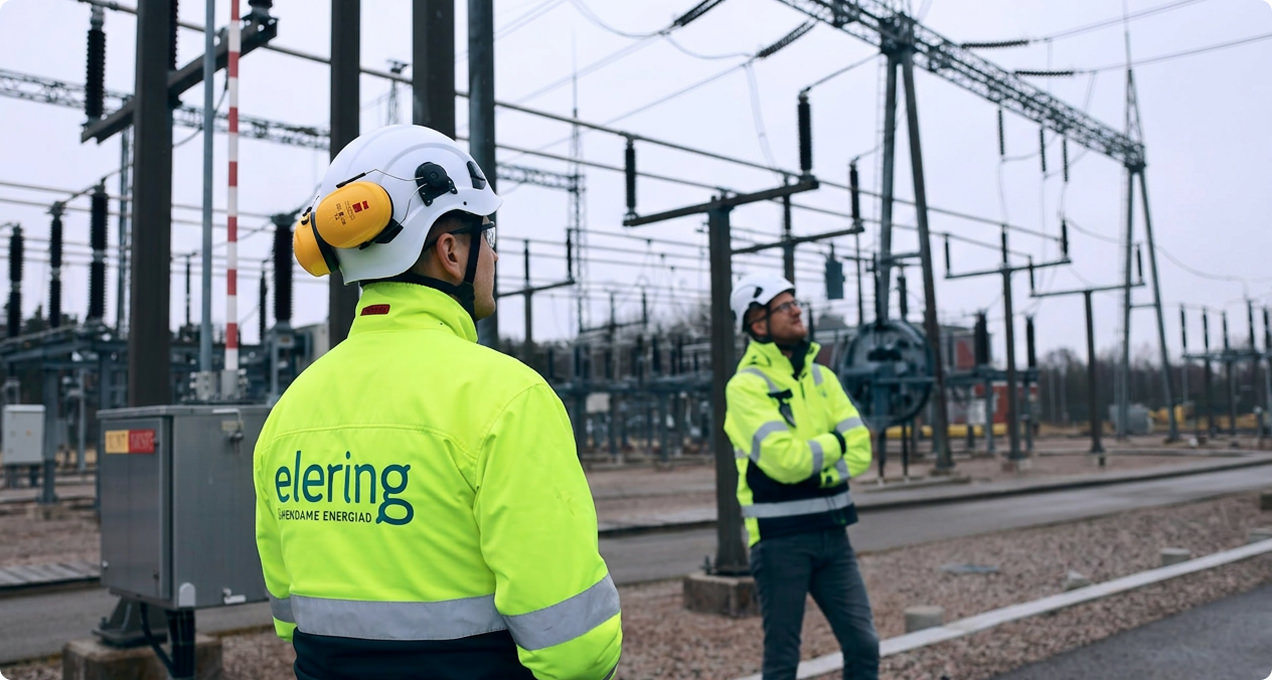
Estonia’s independent electricity and gas transmission system operator, whose Estfeed Datahub manages 1.5 million metering points and underpins the country’s liberalized energy market. 

Regression testing
10-50x faster
Metering points
1.5 million
Continuity
Zero downtime during rebuild

Challenge 

Estfeed was originally built by an external firm relying on subcontractors without energy-sector expertise, leaving Elering with massive datasets, dozens of interdependent access rules, and significant technical debt — all while the platform had to keep serving millions of daily energy market transactions. 

Solution 

  • Agile, collaborative practices. Moved from quick fixes to Kanban, agile design, and requirements-driven processes; Elering’s in-house architects guide the vision, Srini executes. 
  • AI-powered productivity. Windsurf, Gemini, NotebookLM, and ChatGPT speed up development, documentation, and translation across the team. 
  • Custom AI testing tool. A Python-based AI testing tool that sped up regression testing by 10–50× — essential given the system’s size and complexity. 
  • Domain-specific investment. Unlike prior subcontractors, Srini invested time in understanding energy-sector IT, so every solution fits the regulatory and operational reality. 
  • AI
  • Backend
  • Java
  • Public
  • Self-Service

Result 

  • Estfeed continues to support millions of energy market transactions without disruption, even mid-rebuild. 
  • Regression cycles that used to take weeks now complete in a fraction of the time. 
  • Elering shifted from fragmented outsourcing to a hand-in-hand in-house + Srini model. 
  • New features and fixes ship much faster — critical in the fast-moving European energy market. 


Key takeaway 

Mission-critical national infrastructure can be rebuilt mid-flight — but only with domain investment, AI-paired engineering, and in-house leadership owning the vision. 

Building trust in lending: how Modena achieved instant credit decisions with AI and custom development

The collaboration between Modena and SRINI has been ongoing for over four years, delivering continuous improvements and growth.

Modena is an Estonian-based FinTech company that provides smart payment solutions and flexible financing. They bridge the gap between merchants and consumers by offering seamless “Buy Now, Pay Later” (BNPL) integrations and traditional credit products through a fully digital, user-friendly ecosystem.

1. BNPL & Checkout Solutions (B2C)

Modena’s core strength lies in its embedded finance tools for e-commerce and retail stores, designed to increase conversion rates and average order value.

Pay in 3 (Split Pay): Customers can divide their purchase into three equal monthly installments. This is typically interest-free and fee-free for the consumer, making it a powerful alternative to credit cards.

Pay Later (30 Days): Often marketed as “Click & Try,” this allows customers to order goods, receive them, and only pay after 30 days. It is ideal for fashion and home decor where customers want to verify the quality before committing.

Modena Hire-Purchase (Järelmaks): For high-ticket items (electronics, furniture, etc.), Modena offers long-term financing for up to 48 months with instant credit decisions at the point of sale.

2. Personal Lending Products

Beyond the checkout, Modena provides direct-to-consumer financial services via their online platform.

Credit Line (Krediidiliin): A flexible “digital wallet” with a limit of up to €5,000. Users only pay interest on the amount they actually withdraw, providing a safety net for unexpected expenses.

Small Loans & Refinancing: Fixed-term loans for personal projects or the consolidation of existing high-interest debts into a single, more affordable monthly payment.

3. Business Solutions (B2B)

Modena supports the growth of small and medium-sized enterprises (SMEs) with fast, data-driven credit products.

Business Loans: Quick financing up to €50,000 for inventory, equipment, or working capital.

Merchant Portal: A dedicated dashboard for retailers to track BNPL performance, manage refunds, and analyze customer behavior in real-time.

4. Investment Opportunity: Modena Capital

Unique to Modena is their integrated investment platform, allowing retail and institutional investors to earn returns by funding the loan portfolio.

Target Returns: Investors can earn up to 11% p.a.

Safety Features: Most investments are protected by a 60-day buyback guarantee, reducing the risk for the investor.


Why Modena Stands Out?

Speed: Their proprietary credit scoring algorithm provides decisions in seconds.

Regulatory Status: Licensed as a creditor by the Estonian Financial Supervision Authority, ensuring high standards of transparency and consumer protection.

Seamless Integration: Their API allows merchants to add multiple payment options to their webshop with minimal technical effort.

In short: Modena is the Baltic answer to Klarna, offering a comprehensive suite of tools that make buying, selling, and lending more flexible and accessible for the digital age.

  • A frictionless lending experience with near-instant credit decisions.
  • Higher accuracy in credit scoring, reducing risk compared to external solutions.
  • A trusted and user-friendly interface, which strengthened customer confidence.
  • Agility in product development, allowing Modena to respond to market needs faster.
  • AI
  • Backend
  • Kotlin
  • Self-Service
  • UX

Case studies

What Clients say

Working with SRINI has been a consistently positive experience for our team at Bondora. When we first engaged them, we needed a development partner who could hit the ground running in a complex, regulated fintech environment — and SRINI delivered exactly that.

SRINI has been an essential technology partner for Modena from day one. Their team truly understands the fintech landscape and consistently delivers reliable, scalable solutions that keep our installment payment platform running smoothly. What we value most is their ownership mindset — they don't just execute tasks, they think alongside us.

SRINI helped us build the tech backbone that makes food rescue retail actually work at scale. From inventory systems to our customer-facing platform, they understood that speed and reliability aren't optional when you're dealing with perishable goods and tight margins. A partner who gets both the mission and the mechanics.

Our partnership with SRINI goes beyond a typical vendor relationship. As a strategic investment and development partner, SRINI has consistently proven that they deliver on their commitments — both technically and commercially. They bring structure, transparency, and genuine expertise to every project we co-develop. It's rare to find a software company that thinks like a business partner, not just a service provider.