AI integrated innovative helpdesk

Modena Estonia OÜ is a credit and payment institution operating under a license (4.1-1/100) issued by the Estonian Financial Supervision Authority. The company provides flexible payment and financing solutions to both consumers and merchants. Modena’s product portfolio includes a “Pay in 3” zero-interest installment solution, instalment plans of up to 48 months, consumer loans, and Open Banking-based bank payments. The business is split across two portals — modena.ee (consumer-facing lending and payment services) and modena.capital (investor portal).

As a licensed financial institution, Modena operates in an environment where every customer communication, response, and escalation must be auditable, regulation-compliant, and consistently high-quality. The customer support team handles inbound emails in three languages (Estonian, English, Russian) and serves two distinct audiences with very different needs and regulatory frameworks — borrowers and investors.

Solution

  • SRINI built Modena Helpdesk — an AI-native customer support platform where artificial intelligence is not a separate “chatbot on the side” but is deeply integrated into 11 distinct business workflows. The core design principle was clear: AI gives agents superpowers, but humans always remain the final decision-makers — every AI-generated output (a reply, a category, a FAQ draft, a trend report) goes through human review before it reaches a customer or the database.
  • The platform is built on a deliberately lean and controllable tech stack — a PHP 8 monolith with a MySQL database, vanilla JavaScript on the front end, and cron jobs for background tasks — and it uses Anthropic’s Claude Messages API across three model tiers (Haiku, Sonnet, Opus). Each AI scenario uses the model that is optimal for cost-efficiency: triage and classification (high volume, simple task) run on the cheaper Haiku; reply drafting and contextual reasoning use Sonnet; Opus is reserved for the most complex cases.
  • Integration with Modena’s existing infrastructure — Microsoft 365 mail via Microsoft Graph, Azure AD SSO, and Zendesk archive sync — was delivered in a way that didn’t disrupt operations for a single day.
  • AI
  • Backend
  • PHP
  • Self-Service
  • UX
gain (5 agents): ~€27,420
Annual direct financial
€20 280 / year
Labor cost savings
Zendesk Suite + Advanced AI: ~€7 140 / year
Direct software savings vs.
~27.5h per week 12 h per month ≈ 0.7 FTE
Time saved by AI features:

Standout features

  • Per-ticket AI chat box. Every ticket has a side-panel chat where agents can talk to Claude in the context of that specific ticket. At the start of each conversation, the AI is given a dynamic context block — ticket metadata, the last 20 comments, three similar previously resolved Zendesk tickets, and portal-specific knowledge base articles. A classic RAG pattern, without a vector store.
  • Automatic email triage. Every inbound email is classified in the background: priority, category, language, a 120-character summary, and an escalation flag. Angry customers automatically rise to the top of the queue.
  • AI-generated reply drafts. The agent clicks “Generate reply” and gets a complete email draft in the customer’s language, in the right tone, grounded in Modena’s knowledge base. The draft is never sent automatically — the agent reviews and sends it.
  • 🧙 Personal prompt wizard. Each agent goes through a 5–7 question conversation, after which the AI builds them a personalized response prompt — asking about their role, areas of responsibility, tone, favorite phrases, and words to avoid. Users don’t need to learn “prompt engineering.”
  • Similar tickets RAG. From the Zendesk archive of resolved tickets, the system surfaces the three most similar cases for every new query and feeds them as context. The AI gets to see how a human handled the same kind of question before.
  • Portal-specific knowledge base. Every KB article is tagged with a portal (modena.ee OR modena.capital) — an investor ticket never sees a lending FAQ and vice versa. This solves the classic AI failure mode of “saying correct things, but for the wrong context.”
  • Weekly trend analysis. Every Monday morning, Claude emails the admin team a summary of patterns from the past seven days — recurring issues, escalated topics, possible technical glitches. Operational intelligence without an analyst on payroll.
  • Self-extending knowledge base. On Sunday evenings, Claude reviews comments from resolved tickets and drafts the three most frequently recurring FAQs. The admin gets a notification and clicks “publish” after review. The KB grows automatically based on what agents are actually answering.
  • Cost-aware model selection. Admins can see and override the model used in each AI scenario through the UI. Defaults are set per use case — this is a genuinely dollar-cost-aware AI architecture.

  • Audit transparency. Every AI action is logged: who, when, what context, what result. Mandatory in financial services, useful everywhere else.
  • Graceful degradation. If the Claude API is down, the platform keeps running without it — categories stay empty, triage returns defaults, agents reply manually. AI is an enhancement, not a critical path

Results

Based on a conservative scenario (a 5-person support team handling ~80 emails and ~50 tickets per day):

– Quality improvements that are measurable but not converted to euros:

– Response time dropped from 5–10 minutes to 1–2 minutes (review-and-send time)

– Escalations now reach the right person on the same day, not from the end of the queue

– Reply quality is more consistent across agents — everyone draws from the same KB and prior resolutions

– New hires can use the platform on day one without any “prompt engineering” training

Key takeaway

Modena Helpdesk shows that an AI-native support operation doesn’t require an “AI startup” budget — what it requires is careful integration into existing business workflows, a cost-conscious model strategy, and the discipline to keep humans in the loop. The result is a platform where AI is an invisible layer working everywhere on agents’ behalf, but never taking the final decision out of human hands.

The same approach is transferable to any organization that handles a meaningful volume of customer support, sales, or internal request flows — especially in regulated sectors (fintech, healthcare, public sector) where audit transparency and human oversight are mandatory.

Want a similar solution for your business? Let’s talk about how SRINI can build an AI-native platform tailored to your workflows.

[Get in touch →] rasmus@srini.ee

SRINI OÜ · Software development and IT modernization · Tallinn, Estonia


Estonian Population Register – Dynamic Data Access and Smart Governance

Ministry of the Interior — IT and Development Centre (SMIT)

The population register is a database which unites the main personal data on Estonian citizens, citizens of the European Union who have registered their residence in Estonia, and aliens who have been granted a residence permit or right of residence in Estonia.

The register is maintained and developed by the Ministry of the Interior, as the chief administrator of the register. Siseministeerium The authorized processor of the population register is SMIT — the IT and Development Centre of the Ministry of the Interior.

Key facts:

  • Sector: Public sector — population management, identity, and internal affairs IT
  • Chief processor: Ministry of the Interior (Siseministeerium)
  • Authorized processor: SMIT (Siseministeeriumi infotehnoloogia- ja arenduskeskus)
  • Legal basis: Population Register Act

Problem

  • Estonia’s e-population register processes over 200 million data queries per year, serving more than 260 institutions
  • Existing X-road services were limited by static structures and heavy query loads
  • Insufficient control over data access and processing raised security and transparency concerns
  • A modern solution was needed to improve scalability, governance, and accountability in how data is managed and shared

Solution

  • SRINI redesigned the X-road services using REST architecture with built-in intelligent control mechanisms
  • Queries are now dynamically configurable — data managers can define which fields are accessible, under what conditions, and for what legal or contextual purpose
  • A rule-based framework enables autonomous service governance aligned with AI-driven decision logic
  • Developed a new graphical interface for managing user access rights and monitoring service usage through detailed audit logs
  • Enabled bundling of multiple queries under a single action, tagged with legal context such as “justified interest” or “public interest”
  • Introduced semantically structured data processing for transparent and traceable data governance

Result

  • A secure, flexible, and AI-ready data access platform for one of Estonia’s most critical digital infrastructures
  • Full transparency, automation, and intelligent control over how population data is queried and shared
  • Enhanced public sector data governance across 260+ connected institutions
  • Lays the groundwork for future AI-powered services across government

MISX – Smart Monitoring and Pattern Detection for Estonia’s Police and Border Guard Board

Police and Border Guard Board

The Police and Border Guard Board (PPA) is a unified national governmental agency within the Estonian Ministry of Interior, responsible for law enforcement and internal security in the Republic of Estonia. It was formed on January 1, 2010, through the merger of the Police Board, Central Criminal Police, and the Estonian Border Guard.

Key facts:

  • Sector: Public sector — law enforcement, internal security, and border management
  • Parent authority: Ministry of the Interior
  • Headquarters: Pärnu maantee 139, Tallinn, Estonia
  • Employees: ~5,000
  • Established: 2010

Problem

  • The Police and Border Guard Board needed a modern solution for managing object and individual surveillance within its new MISX procedural information system
  • The legacy approach lacked scalability and relied heavily on manual work
  • Limited support for tracking complex relationships between entities such as vehicles and persons in investigative contexts
  • The existing tools were insufficient for the pace and complexity of modern law enforcement workflows

Solution

  • SRINI developed a new-generation surveillance module for MISX based on microservices architecture
  • Implemented intelligent automatic pattern detection between entities — for example, linking a person to a vehicle in the context of a traffic incident
  • Built dynamic form generation that adapts the interface based on data type and context, improving usability and reducing training needs
  • Introduced rule-based automation for status changes and user rights — such as adjusting permissions based on age or event deadlines
  • Integrated data validation via X-road connections to ensure accurate, up-to-date information from national registries

Result

  • Significantly improved decision-making, process automation, and user efficiency across the surveillance workflow
  • AI-powered features reduce manual work and streamline identification of relevant data relationships
  • Modular structure ensures adaptability for future procedural and administrative workflows
  • A more intelligent, scalable, and responsive public safety tool that saves time and increases operational effectiveness

Smarter UI and Predictive Error Handling for Estonia’s e-Government Portal

The organization responsible for developing and managing the Estonian state portal eesti.ee is the Information System Authority, known in Estonian as Riigi Infosüsteemi Amet (RIA).

RIA operates under the Ministry of Economic Affairs and Communications and serves as the central hub for Estonia’s digital infrastructure. Their responsibilities regarding the portal include:

Strategic Development: Moving the portal toward a “proactive state” (Personaalriik), where the system automatically notifies citizens about expiring documents or eligible benefits.

Core Services: Managing the official state mailbox (@eesti.ee), the central authorization system (Pääsuke), and the Eesti.ee mobile app.

Technical Integration: Ensuring that various government databases and registers communicate seamlessly through the X-Road (X-tee) infrastructure.

Cybersecurity: Protecting the portal’s data and ensuring secure authentication via ID-card, Mobile-ID, and Smart-ID.

In short, RIA is the “architect” and “engine room” behind the digital interface between the Estonian state and its citizens.

Problem:

  • Eesti.ee, the central digital gateway for Estonia’s public services, required ongoing enhancements to improve user experience and ensure timely access to personal information and services. The user interface lacked contextual responsiveness, while service errors often went undetected or uncommunicated outside working hours.

Solution:

  • SRINI enhanced the portal with an intelligent, user-centric interface and automated error detection system. Using real-time monitoring and event-based alerts, the system now identifies service disruptions and notifies both users and partner institutions – 24/7. This lays the foundation for predictive error management.

Additionally, users benefit from personalized dashboards and in-article service queries, enabling them to access relevant data directly within content, without switching sections. This creates a context-aware, smart UI tailored to each user’s needs.

  • Backend
  • Java
  • Public
  • Self-Service

Result:

  • The upgraded Eesti.ee portal offers a dynamic and intuitive user experience powered by AI principles. Automated issue detection, personalized content access, and a flexible dashboard combine to increase user trust, reduce friction, and make Estonia’s digital services more reliable, proactive, and accessible than ever before.

AI-Driven Oversight in Estonia’s Firearm Registry

The PPA stands for the Police and Border Guard Board (Politsei- ja Piirivalveamet in Estonian). It is one of the largest and most important state agencies in Estonia, operating under the jurisdiction of the Ministry of the Interior.

The PPA was formed in 2010 through the merger of the Police, the Border Guard, and the Citizenship and Migration Board, creating a unified organization responsible for internal security.

Problem:
  • The Police and Border Guard Board’s firearm license supervision process was heavily reliant on manual tasks and fragmented systems. Officials had to navigate multiple interfaces, perform time-consuming registry queries, and handle paperwork without unified support. This not only slowed down the process but increased the risk of human error and limited oversight transparency.

Solution:

  • SRINI designed and implemented a centralized, intelligent supervision module within the national firearm registry. The solution uses automated queries across key government registries via X-Road and applies predefined rules to detect when supervision is required. Once triggered, the system initiates the case, gathers data, compiles a structured report, and drafts a decision – without human intervention.

To ensure traceability and trust, the system includes a detailed data tracker that monitors all registry interactions, supporting auditable AI behavior. Built-in validation mechanisms help avoid duplicated cases and highlight logical inconsistencies, further reducing the risk of error. The entire process is managed from a single interface, dramatically simplifying the work of public officials.

  • AI
  • Backend
  • Java
  • Public

Result:

  • The new supervision module has transformed firearm license oversight into a streamlined, intelligent process.
  • A significant portion of routine tasks has been automated, enabling faster and more consistent decision-making.
  • Human errors have been minimized, data quality has improved, and oversight activities have become far more transparent and accountable.
  • As a result, the Police and Border Guard Board can now deliver a higher standard of public service – efficient, trustworthy, and built for the digital age.

Case Study: BNPL and Loan Product Suite for Modena.ee

Modena is an Estonian-based FinTech company that provides smart payment solutions and flexible financing. They bridge the gap between merchants and consumers by offering seamless “Buy Now, Pay Later” (BNPL) integrations and traditional credit products through a fully digital, user-friendly ecosystem.

1. BNPL & Checkout Solutions (B2C)

Modena’s core strength lies in its embedded finance tools for e-commerce and retail stores, designed to increase conversion rates and average order value.

Pay in 3 (Split Pay): Customers can divide their purchase into three equal monthly installments. This is typically interest-free and fee-free for the consumer, making it a powerful alternative to credit cards.

Pay Later (30 Days): Often marketed as “Click & Try,” this allows customers to order goods, receive them, and only pay after 30 days. It is ideal for fashion and home decor where customers want to verify the quality before committing.

Modena Hire-Purchase (Järelmaks): For high-ticket items (electronics, furniture, etc.), Modena offers long-term financing for up to 48 months with instant credit decisions at the point of sale.

2. Personal Lending Products

Beyond the checkout, Modena provides direct-to-consumer financial services via their online platform.

Credit Line (Krediidiliin): A flexible “digital wallet” with a limit of up to €5,000. Users only pay interest on the amount they actually withdraw, providing a safety net for unexpected expenses.

Small Loans & Refinancing: Fixed-term loans for personal projects or the consolidation of existing high-interest debts into a single, more affordable monthly payment.

3. Business Solutions (B2B)

Modena supports the growth of small and medium-sized enterprises (SMEs) with fast, data-driven credit products.

Business Loans: Quick financing up to €50,000 for inventory, equipment, or working capital.

Merchant Portal: A dedicated dashboard for retailers to track BNPL performance, manage refunds, and analyze customer behavior in real-time.

4. Investment Opportunity: Modena Capital

Unique to Modena is their integrated investment platform, allowing retail and institutional investors to earn returns by funding the loan portfolio.

Target Returns: Investors can earn up to 11% p.a.

Safety Features: Most investments are protected by a 60-day buyback guarantee, reducing the risk for the investor.


Why Modena Stands Out?

Speed: Their proprietary credit scoring algorithm provides decisions in seconds.

Regulatory Status: Licensed as a creditor by the Estonian Financial Supervision Authority, ensuring high standards of transparency and consumer protection.

Seamless Integration: Their API allows merchants to add multiple payment options to their webshop with minimal technical effort.

In short: Modena is the Baltic answer to Klarna, offering a comprehensive suite of tools that make buying, selling, and lending more flexible and accessible for the digital age.

Problem:

  • Modena needed a scalable and intelligent platform to support its Buy Now, Pay Later (BNPL) and loan offerings for both private individuals and business customers. Key challenges included real-time creditworthiness assessment, streamlining customer onboarding, providing responsive support, and enabling accurate financial forecasting. Manual processes limited growth potential and delayed decision-making in a highly competitive fintech landscape.

Solution:

  • SRINI developed a full-featured BNPL and loan platform tailored to Modena’s needs. The solution includes:
  • An AI-powered credit scoring engine that evaluates private and business customer risk profiles in real time using transactional and behavioral data.
  • A smart customer support system using AI chatbots for fast, 24/7 assistance.
  • Webshop plugins that allow merchants to easily offer Modena’s BNPL service at checkout.
  • A streamlined loan application portal supporting both B2C and B2B clients.
  • Integrated financial planning and forecasting tools, leveraging machine learning models to predict repayment behaviors, funding needs, and cash flow trends.
  • AI
  • Backend
  • Kotlin
  • Self-Service
  • UX

Result:

  • Modena now delivers a frictionless lending experience with greater accuracy, speed, and customer satisfaction. The AI credit scoring system enables near-instant approvals while reducing default risk. Customer support response times dropped significantly, and the webshop integration expanded Modena’s reach across Estonia’s digital retail market. With data-driven forecasting, Modena gained stronger financial control and a clear competitive edge in the fintech ecosystem.

Ridango ticketing and fleet management system

Client overview

Ridango is an Estonian technology company that has become a global leader in intelligent transport systems (ITS) and contactless ticketing solutions. Founded in 2009, it specializes in making public transport more efficient and user-friendly for both passengers and cities.

While it started in Tallinn—helping the city become the first capital in the world to offer free, digitally-managed public transport—Ridango has expanded rapidly:

Ridango perates in over 25 countries across Europe and beyond.

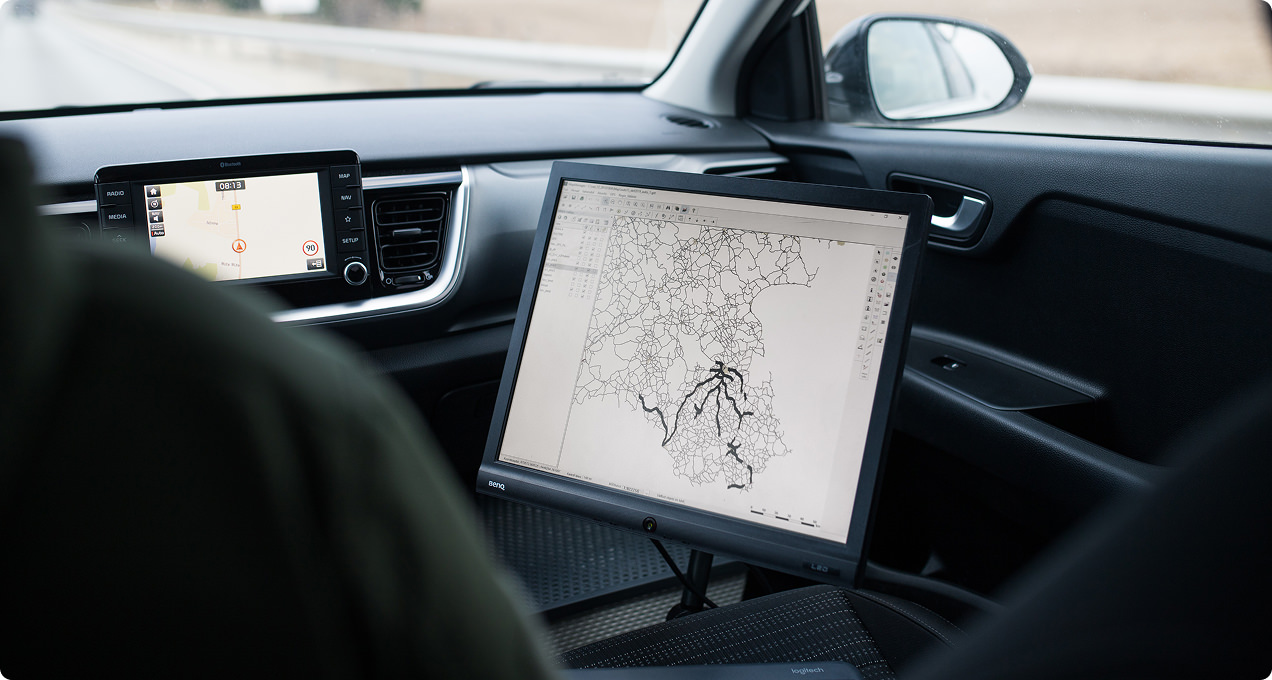
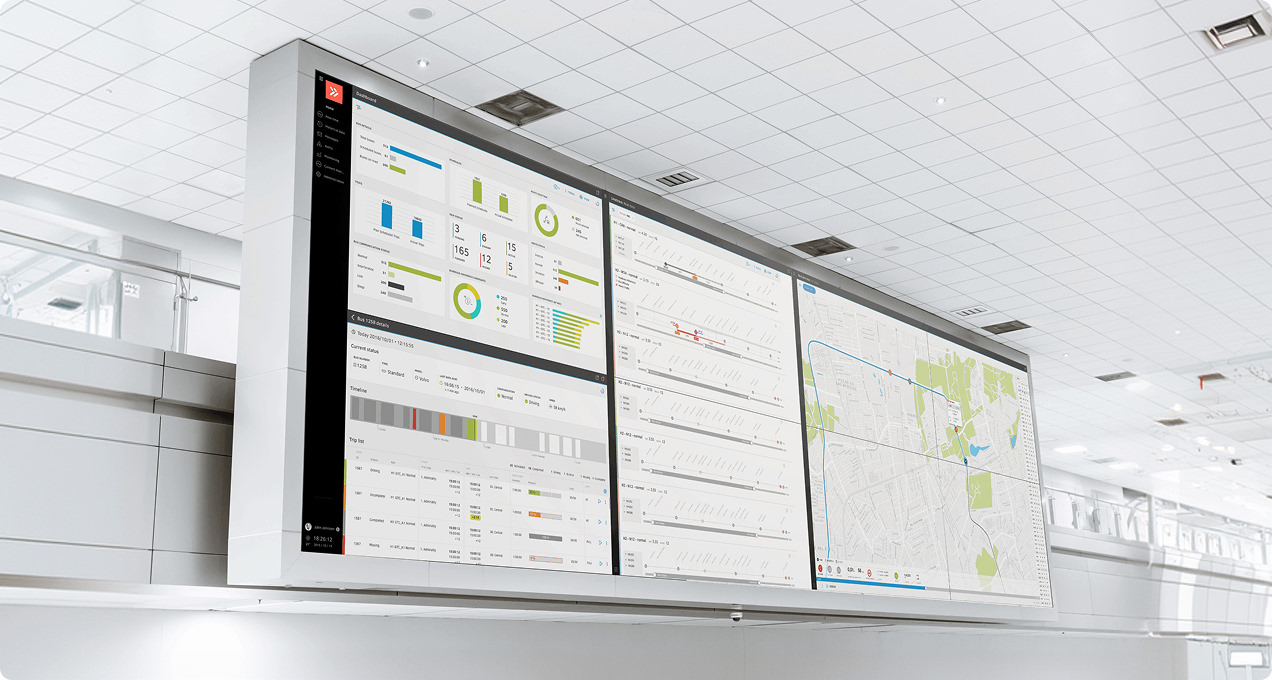
  • AI
  • Backend
  • Java
  • Self-Service

Problem:

  • Public transport systems need automated ticketing and precise vehicle tracking for operational efficiency, especially in international cities.

Result:

  • New platform launching with a Swedish client this summer; next rollout in Athens, Greece.

Case Study: AI-Powered Webshop and Warehouse Platform for Sumena.ee

Client overview

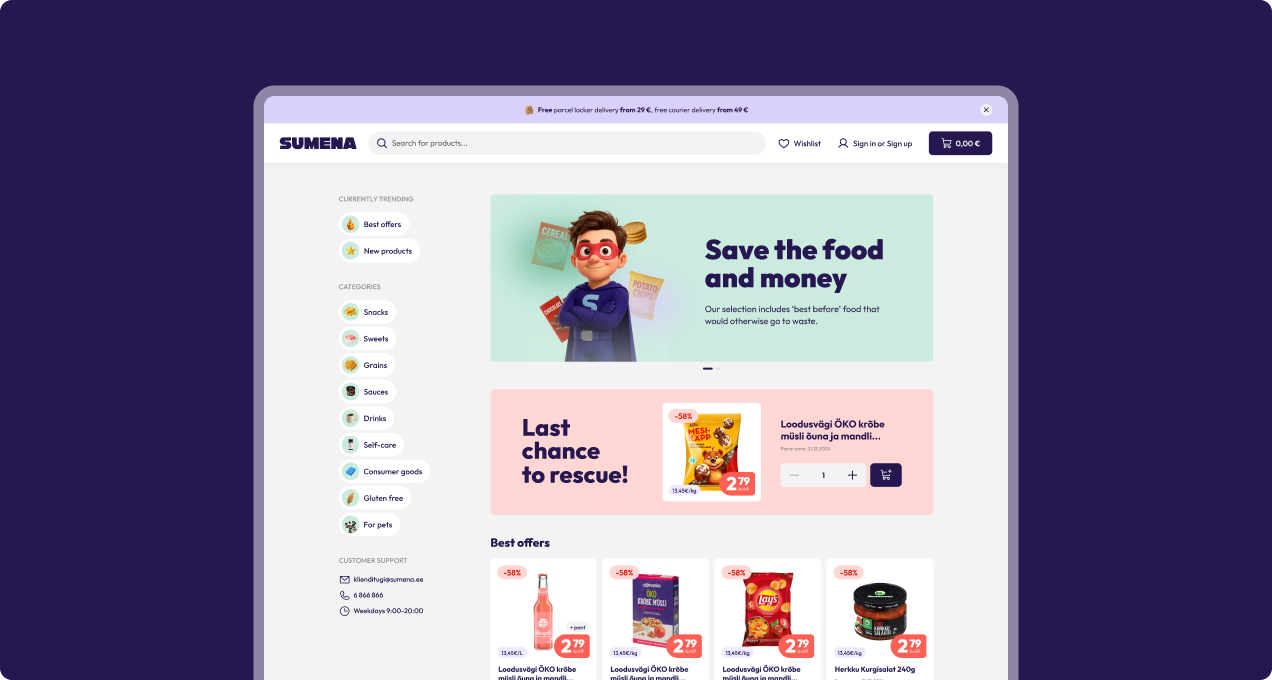
Sumena is an innovative Estonian impact-company and retail startup dedicated to reducing food waste while providing consumers with significantly discounted groceries.

Sumena’s primary goal is to fight food waste. They purchase high-quality products from manufacturers and wholesalers that are nearing their “Best Before” date, have damaged packaging, or are being discontinued. By selling these items at 30–80% discounts, they prevent perfectly edible food from ending up in landfills.

Beside e-shop they have 6 physical shops in Estonia.

  • AI
  • Backend
  • PHP
  • Self-Service
  • UX

Problem:

  • Sumena.ee needed a modern e-commerce solution that could keep up with growing customer demands
  • Manage warehouse operations efficiently, and optimize product sourcing

The manual approach to customer support, pricing decisions, and stock planning created inefficiencies, delayed responses, and missed sales opportunities due to inaccurate demand forecasting.

Solution:

  • SRINI developed a comprehensive AI-enhanced platform for Sumena.ee, integrating a responsive webshop, an intelligent sourcing module, and a warehouse management system.
  • The webshop was equipped with an AI-driven chatbot for 24/7 customer support, capable of understanding user queries and guiding purchases. Machine learning models were implemented to analyze browsing and purchase data, enabling smart predictions about product popularity and optimal pricing strategies.
  • The platform also uses AI to forecast future stock needs and estimate sourcing costs based on seasonality, trends, and supplier behavior.

Result:

  • The platform streamlined financial operations, and with added AI tools, could improve approval accuracy, customer satisfaction, and risk mitigation over time.
After rebranding and new webshop the traffic increased
2x
Revenue increased
2x MoM

Loan and Financial Product Management System

Client overview

Bondora is a leading European financial technology (FinTech) company based in Tallinn, Estonia. Founded in 2008, it has evolved from a pioneer in peer-to-peer (P2P) lending into a streamlined digital platform focused on simple investing and consumer credit.

Consumer Lending: On the other side of the marketplace, Bondora provides unsecured personal loans to borrowers in Estonia, Finland, Spain, and the Netherlands.

  • .NET
  • AI
  • Backend
  • Self-Service

Problem:

  • Bondora needed a system to manage loans and various financial products efficiently across markets.

Solution:

  • SRINI developed an information system supporting modular workflows and financial data integration. AI was applicable for automating credit checks, forecasting defaults, and enhancing customer targeting.

Result:

  • The platform streamlined financial operations, and with added AI tools, could improve approval accuracy, customer satisfaction, and risk mitigation over time.

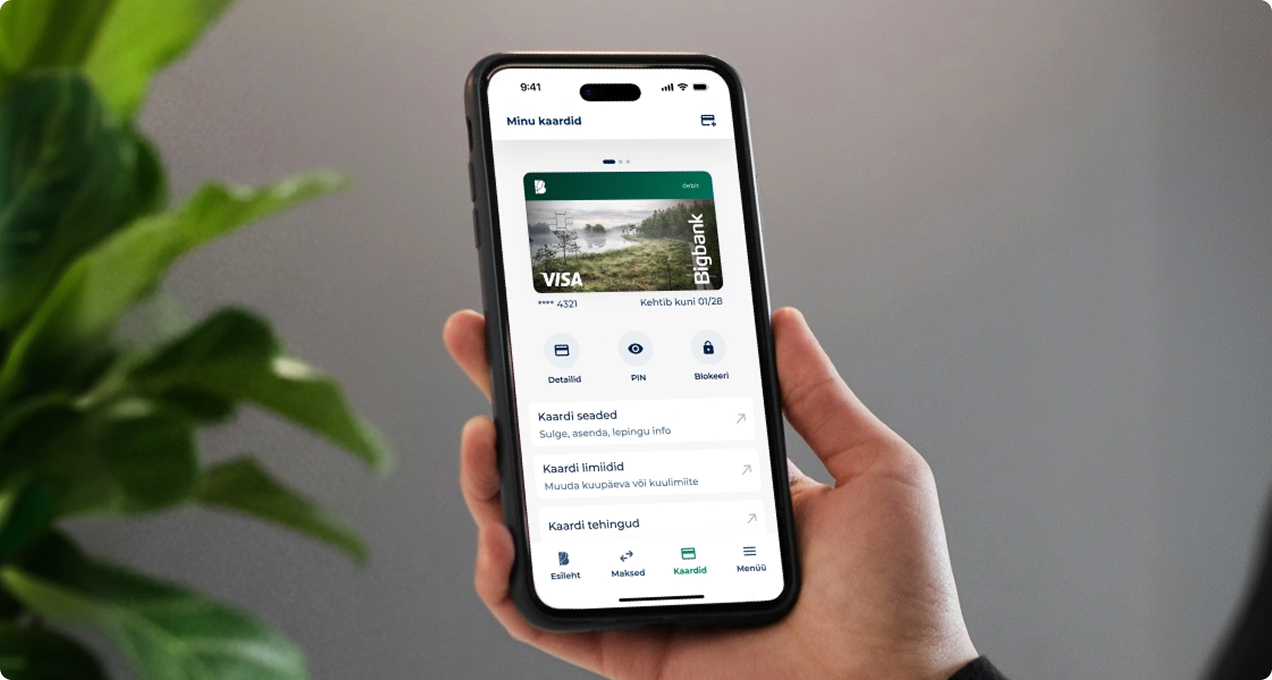
VISA Credit Card Development Project for Bigbank

Client overview

Bigbank is an Estonian-owned commercial bank that has evolved from a specialized consumer credit institution into a full-service digital bank.

Financial Highlights (Year-End 2025):

  • Total Assets: €3.3 billion, representing a strong growth of 19% year-on-year.
  • Net Profit: €37.9 million (up 17.5% compared to 2024).
  • Loan Portfolio: €2.7 billion (+23% growth). The growth is increasingly driven by home loans and corporate lending, moving away from their historical focus solely on consumer credit.
  • AI
  • Backend
  • Java
  • Self-Service

Problem:

  • Bigbank sought to develop and launch a multi-featured VISA credit card platform including financial integrations, real-time functionalities.

Solution:

  • SRINI carried out software development, API integrations, and feature implementation, integrating AI models could assist in credit scoring, real-time fraud prevention, customer risk profiling.

Result:

  • The resulting system allowed secure and efficient credit card operations. With AI augmentation, the platform could continuously learn from user behavior to enhance financial security and decision-making.

Betsafe Platform Enhancements in Multiple Countries

Client overview

Betsafe is an international gambling brand owned by the Swedish giant Betsson Group. While the exact number of countries fluctuates based on evolving local regulations and licensing agreements, Betsafe operates in over 20 markets globally.

  • .NET
  • AI
  • Backend

Problem:

  • Betsafe needed ongoing enhancements to its gaming platform, which communicates with payments, campaign, customer management systems across various markets.

Solution:

  • SRINI implemented cross-platform improvements while ensuring compliance and performance, AI-driven fraud detection, recommendation engines. Customer segmentation tools were applicable to improve retention and security.

Result:

  • The platform became more adaptive to user behavior and market trends. The application of AI in fraud detection and personalization significantly improved customer trust and engagement.

Europcar Online Rental Platform Development

Client overview

Europcar is a leading global mobility service provider and one of the largest car rental companies in the world. Founded in 1949 in Paris, it is currently owned by a consortium led by the Volkswagen Group.

  • .NET
  • AI
  • Backend
  • Self-Service

Problem:

  • Europcar needed to enhance its web-based short- and long-term car rental services to improve customer experience and streamline booking operations.

Solution:

  • SRINI upgraded the existing platform, focus on user experience, backend optimization. Machine learning models could have been implemented to enable dynamic pricing, demand forecasting, and personalized recommendations.

Result:

  • The result was a more responsive, user-friendly rental interface. Potential AI modules could further optimize fleet management and revenue through predictive analytics.

Eesti Loto Production System Maintenance and Development

Eesti Loto is the state-owned lottery company in Estonia and the sole legal provider of lottery games in the country. It is 100% owned by the Republic of Estonia and operates under the Ministry of Finance.

Problem:

  • Eesti Loto required seamless integration of their production environment with the national Time-Stamping Service (TLS) to ensure tamper-proof records and compliance with legal standards.

Solution:

  • SRINI developed a secure integration with the TLS system, added production support, improved system performance, using AI-based log analysis and anomaly detection could have enhanced system monitoring and fraud detection.
  • AI
  • Backend
  • Java
  • Public
  • Self-Service

Result:

  • The integration ensured data integrity
  • Reduced compliance risks
  • Allowed Eesti Loto to maintain a stable and scalable digital environment, potentially benefiting from AI-powered operational insights.

Rebuilding critical energy infrastructure: how SRINI helped Elering transform its national datahub

The solution: agile development, AI-powered testing, and a cultural reset

Elering is Estonia’s national transmission system operator (TSO) for electricity and natural gas. It is a state-owned enterprise that functions as the backbone of the country’s energy infrastructure.

Key elements of the solution included

  • Agile and collaborative practices: Moving away from “quick fixes” to modern development methods (Kanban, agile design, requirements-driven processes). The partnership allowed Elering’s IT architects and analysts to guide the vision, while Srini provided high-quality development execution.
  • AI-powered productivity: Srini used AI coding tools (Windsurf IDE plugins, Gemini, NotebookLM, ChatGPT) to accelerate development and reduce time to market. Documentation, translation, and formatting were streamlined through AI, improving both internal and external knowledge sharing.
  • Custom AI testing tools: Srini developed a Python-based AI testing tool that sped up regression testing by 10–50x – an essential breakthrough given the system’s size and complexity.
  • Domain-specific expertise: Unlike earlier subcontractors, Srini invested in understanding the unique challenges of energy-sector IT, ensuring that each solution was fit-for-purpose and aligned with Estonian best practices.
  • AI
  • Backend
  • Java
  • Public
  • Self-Service

The collaboration between Modena and Srini has been ongoing for over four years, delivering continuous improvements and growth.

  • A frictionless lending experience with near-instant credit decisions.
  • Higher accuracy in credit scoring, reducing risk compared to external solutions.
  • A trusted and user-friendly interface, which strengthened customer confidence.
  • Agility in product development, allowing Modena to respond to market needs faster.

Building trust in lending: how Modena achieved instant credit decisions with AI and custom development

The collaboration between Modena and SRINI has been ongoing for over four years, delivering continuous improvements and growth.

Modena is an Estonian-based FinTech company that provides smart payment solutions and flexible financing. They bridge the gap between merchants and consumers by offering seamless “Buy Now, Pay Later” (BNPL) integrations and traditional credit products through a fully digital, user-friendly ecosystem.

1. BNPL & Checkout Solutions (B2C)

Modena’s core strength lies in its embedded finance tools for e-commerce and retail stores, designed to increase conversion rates and average order value.

Pay in 3 (Split Pay): Customers can divide their purchase into three equal monthly installments. This is typically interest-free and fee-free for the consumer, making it a powerful alternative to credit cards.

Pay Later (30 Days): Often marketed as “Click & Try,” this allows customers to order goods, receive them, and only pay after 30 days. It is ideal for fashion and home decor where customers want to verify the quality before committing.

Modena Hire-Purchase (Järelmaks): For high-ticket items (electronics, furniture, etc.), Modena offers long-term financing for up to 48 months with instant credit decisions at the point of sale.

2. Personal Lending Products

Beyond the checkout, Modena provides direct-to-consumer financial services via their online platform.

Credit Line (Krediidiliin): A flexible “digital wallet” with a limit of up to €5,000. Users only pay interest on the amount they actually withdraw, providing a safety net for unexpected expenses.

Small Loans & Refinancing: Fixed-term loans for personal projects or the consolidation of existing high-interest debts into a single, more affordable monthly payment.

3. Business Solutions (B2B)

Modena supports the growth of small and medium-sized enterprises (SMEs) with fast, data-driven credit products.

Business Loans: Quick financing up to €50,000 for inventory, equipment, or working capital.

Merchant Portal: A dedicated dashboard for retailers to track BNPL performance, manage refunds, and analyze customer behavior in real-time.

4. Investment Opportunity: Modena Capital

Unique to Modena is their integrated investment platform, allowing retail and institutional investors to earn returns by funding the loan portfolio.

Target Returns: Investors can earn up to 11% p.a.

Safety Features: Most investments are protected by a 60-day buyback guarantee, reducing the risk for the investor.


Why Modena Stands Out?

Speed: Their proprietary credit scoring algorithm provides decisions in seconds.

Regulatory Status: Licensed as a creditor by the Estonian Financial Supervision Authority, ensuring high standards of transparency and consumer protection.

Seamless Integration: Their API allows merchants to add multiple payment options to their webshop with minimal technical effort.

In short: Modena is the Baltic answer to Klarna, offering a comprehensive suite of tools that make buying, selling, and lending more flexible and accessible for the digital age.

  • A frictionless lending experience with near-instant credit decisions.
  • Higher accuracy in credit scoring, reducing risk compared to external solutions.
  • A trusted and user-friendly interface, which strengthened customer confidence.
  • Agility in product development, allowing Modena to respond to market needs faster.
  • AI
  • Backend
  • Kotlin
  • Self-Service
  • UX

Case studies

What Clients say

Working with SRINI has been a consistently positive experience for our team at Bondora. When we first engaged them, we needed a development partner who could hit the ground running in a complex, regulated fintech environment — and SRINI delivered exactly that.

SRINI has been an essential technology partner for Modena from day one. Their team truly understands the fintech landscape and consistently delivers reliable, scalable solutions that keep our installment payment platform running smoothly. What we value most is their ownership mindset — they don't just execute tasks, they think alongside us.

SRINI helped us build the tech backbone that makes food rescue retail actually work at scale. From inventory systems to our customer-facing platform, they understood that speed and reliability aren't optional when you're dealing with perishable goods and tight margins. A partner who gets both the mission and the mechanics.

Our partnership with SRINI goes beyond a typical vendor relationship. As a strategic investment and development partner, SRINI has consistently proven that they deliver on their commitments — both technically and commercially. They bring structure, transparency, and genuine expertise to every project we co-develop. It's rare to find a software company that thinks like a business partner, not just a service provider.